Please activate JavaScript in your browser to use all interface options.

-315xx70.png)


Rosneft Uncovers New Archaeological Sites
15 January 2026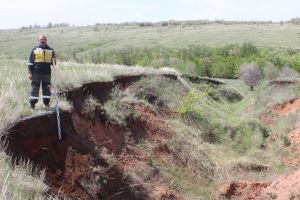
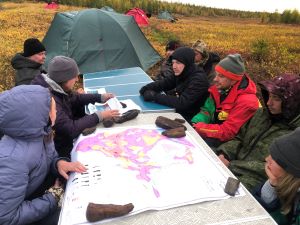
Researchers from Rosneft's scientific institute in Samara discovered seven previously unrecorded archaeological sites in 2025 across the Samara and Orenburg regions. Specialists surveyed more than 200 land plots allocated for commercial development by Samaraneftegaz and Orenburgneft, Rosneft's production subsidiaries.
The survey covered 17 cultural heritage sites, seven of which had never been documented before. The newly discovered sites comprise three burial mound groups, two single burial mounds and a settlement called Nizhnenikolskoye III in Samara region.
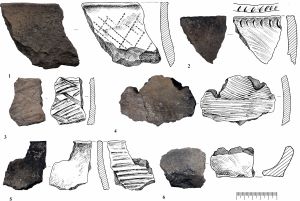
 Artefacts recovered from the settlement—including decorated pottery fragments and animal bones—date to the Srubnaya culture* of the late Bronze Age (mid-second millennium to early first millennium BC), according to the specialists.
Near the village of Pervoye Maya in Orenburg region, researchers uncovered three burial mounds at a previously unrecorded site. The fieldwork yielded surface archaeological material including a bronze stirrup buckle (an element of horse harness) made using casting techniques. The site is thought to date from the early Iron Age (seventh century BC to fourth century AD).
The 2025 fieldwork also established more precise boundaries for known heritage sites including the Maryevka I burial complex, Maryevka II mound and the burial site near Lebyazhka village.
 The surveys conducted by institute specialists have added new archaeological sites to the historical maps of the Urals and Volga regions.
Rosneft is committed to the preservation of historical and cultural heritage and, in accordance with Russian law, conducts archaeological surveys at the pre-project stage of any construction works.
* The Srubnaya cultural-historical community is an archaeological culture of the late Bronze Age (mid-second millennium to early first millennium BC). Geographically, it was distributed across the steppe and forest-steppe zones of Eastern Europe between the Dnieper and the Urals. In the Volga region and Urals, the culture is widely represented by archaeological monuments: settlements and burial mound complexes. Ethnic affiliation: Indo-Iranians. The main activities of Srubnaya culture representatives were livestock farming and agriculture.
For reference:
Archaeological teams have operated from Rosneft's Samara institute since 2019. Over six years, specialists have surveyed more than 1,600 sites for planned facilities, determined boundaries and registered 204 archaeological monuments (settlements, individual mounds, burial mound complexes) with the state, whilst conducting preservation monitoring and inspections of a further 183 cultural heritage sites.
Department of Information and Advertising
Rosneft
January 15, 2026