Please activate JavaScript in your browser to use all interface options.

-315xx70.png)


Rosneft Continues Its Research on Whales
23 July 2025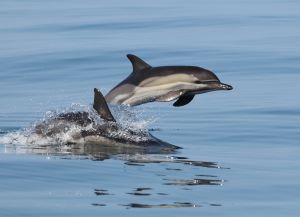
World Whale and Dolphin Day is celebrated every year on July 23. This day was chosen to raise awareness of the need to conserve and protect cetaceans and other marine mammals.
Rosneft places particular emphasis on environmental issues and biodiversity conservation. The Company’s operations are guided by the principle of preserving a healthy environment and biological diversity in all of its regions of operation. One of the key areas of Rosneft’s environmental programme is the study and protection of whale and dolphin populations.
One species that has been receiving close attention is the grey whale of the Sea of Okhotsk population. A programme to monitor these whales has been running off the northeastern coast of Sakhalin Island for almost 30 years. As part of this research, experts conduct annual population counts and observe the animals’ behaviour, study their food sources, and carry out photo-identification studies and acoustic monitoring.
Until the 1990s, the population of grey whales in the Sea of Okhotsk was considered completely depleted, with the species classified as being on the brink of extinction. However, in 2018, the western grey whale population was reclassified as ‘endangered’, indicating a slow but steady recovery of the Sea of Okhotsk subpopulation.
In 2019, the Russian Ministry of Natural Resources included the Sea of Okhotsk populations of grey and bowhead whales on the list of rare and endangered wildlife species requiring priority measures for recovery and restoration. The following year, the Sea of Okhotsk population of grey whales was added to the Red Data Book of the Russian Federation.
In addition, the company is carrying out environmental monitoring of the Okhotsk–Korean grey whale population on the northeastern shelf of Sakhalin Island. Each year, specialists carry out photo-identification and population counts, as well as studying the mammals’ food supply and behaviour. Since feeding and reproduction are the main life cycle phases for grey whales in the Sea of Okhotsk, studying the state of their food supply is one of the most important stages of the monitoring programme.
As part of the Okhotsk–Korean grey whale population study, a unique acoustic monitoring programme is being conducted. This involves recording and analysing levels of natural and man-made underwater noise. This research allows us to study the nature of the sounds and model how they propagate. These acoustic measurements are taken using autonomous underwater recorders that were developed specifically for this project.
Rosneft actively participates in the Interdepartmental Task Force under the Ministry of Natural Resources of the Russian Federation, which is dedicated to conserving the Okhotsk–Korean grey whale population. The task force develops legislative proposals to manage the population and coordinates cooperation between relevant federal and regional executive authorities, businesses, scientific organisations, and civil society organisations.
 In 2020, Rosneft collaborated with the Shirshov Institute of Oceanology of the Russian Academy of Sciences on a large-scale project to study and monitor Black Sea dolphins. Three years of observations have provided up-to-date data on the population size and preferred habitats, and seasonal distribution characteristics of these cetaceans. Recommendations have been drawn up for the study and conservation of dolphins.
For reference:
The grey whale is the only species of whale that feeds on the seabed. They typically scoop up benthic organisms along with water, silt and pebbles from the seabed at depths of 15–60 metres, filtering the suspension through their baleen. Their diet includes up to 70 species of invertebrates, such as annelid worms, bivalves, small crustaceans and young fish.
Grey whales swim slowly, at an average speed of 5–8 km/h, which enables marine parasites to attach themselves to their skin and form colonies. These hitchhikers can collectively weigh up to 180 kg per whale.
Department of Information and Advertising
Rosneft Oil Company
July 23, 2025