Please activate JavaScript in your browser to use all interface options.

-315xx70.png)


Rosneft Supports Celebration of Russian Indigenous Peoples’ Day
30 April 2026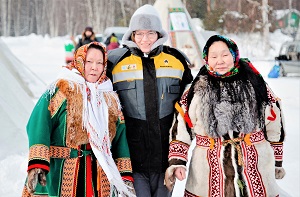
This year marks the first time that the Day of Indigenous and Minority Peoples has been celebrated in Russia. The holiday was established by President Vladimir Putin’s decree with the aim of preserving the unique cultures, traditional ways of life and livelihoods of indigenous peoples. Rosneft and its subsidiaries have sponsored events focusing on this theme in the regions where they operate.
One of the key areas of Rosneft’s social policy is the preservation of the national culture and traditional way of life of the indigenous peoples of the North. In the regions where the Company operates, its subsidiaries are developing infrastructure in northern settlements, building housing for the local population and supporting reindeer-herding families. They are also improving facilities and equipment in educational establishments, social services and healthcare facilities in areas that are traditionally inhabited by indigenous peoples.
In the Leningrad Region, home to the Veps, Izhorians and Votians peoples, Rosneft’s petrol stations hosted the ‘Many Faces of Russia’ campaign. Volunteers from RN-Severo-Zapad informed motorists about the distinctive features of these peoples’ culture, national dress, way of life and traditions. Visitors to the petrol stations learnt about the indigenous peoples’ national cuisine through interactive activities, and were able to sample their baked goods in the Company’s petrol station cafés.
In the Pskov Region, drivers were introduced to the culture of the Setos people. Motorists took part in a quiz about traditional Setos cuisine and attended a workshop on how to make the national drink, spiced pumpkin compote. They also learnt how Rosneft supports indigenous peoples in different regions of Russia. Participants received postcards featuring recipes for popular dishes of the indigenous peoples of north-western Russia.
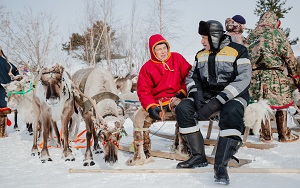 In the Khanty-Mansi Autonomous District–Yugra, Samotlorneftegaz is implementing a variety of social projects, ranging from the promotion of reindeer herding enterprises to the support of educational, cultural, and sporting events organised by the region’s indigenous peoples. This approach helps to preserve the traditional way of life while creating new opportunities to improve quality of life for the Khanty and Mansi peoples. Two major events took place with the company’s support in 2026: a professional skills competition for reindeer herders in Khanty-Mansiysk and the national festival ‘Day of the Ravens’ in Nizhnevartovsk. Projects to provide national villages and remote settlements with internet and mobile phone coverage are of great social significance. Samotlorneftegaz is also involved in improving the facilities of the Solntse National Theatre and the Torum Maa open-air museum of Khanty and Mansi ethnographic culture.
In 2025, RN-Yuganskneftegaz, Rosneft’s key production asset, was named a winner in the ‘Black Gold of Yugra’ regional competition in the ‘Cooperation with Indigenous Communities’ category. The oil company provided financial support to 166 families and indigenous communities. Such initiatives improve the quality of life for indigenous peoples in the north, preserving their identity, traditional livelihoods and crafts while fostering constructive neighbourly relations.
With the support of RN-Uvatneftegaz, the revered ancient festival of the Khanty and Mansi peoples, the Day of the Raven, was held in the Tyumen Region. The festival marks the arrival of spring, the reawakening of nature, and the beginning of a new life cycle. The celebrations at the Uvas Mir Hot Ethnographic Centre (House of the Northern People), which was established with the support of oil workers, attracted guests from various districts of the Tyumen Region, as well as from Yugra and Yamal. The programme included theatrical performances and shows by folk ensembles, as well as a northern multi-event competition. RN-Uvatneftegaz has provided comprehensive support to the Khanty, Mansi and Evenki peoples of the Tyumen Region for many years. In recent years, the company has provided indigenous families with over 180 items of equipment, including snowmobiles, outboard motors, and petrol generators. Thanks to the support of RN-Uvatneftegaz, the ‘Wealth of the Uvatskaya Taiga’ festival and traditional sports competitions are held annually.
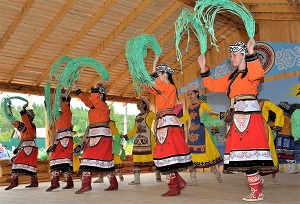 In the Yamalo-Nenets Autonomous District, volunteers from RN-Purneftegaz and Kharampurneftegaz organised a music festival for the first time to celebrate Indigenous Peoples’ Day at the Kharampur Forest Nenets national village, which was built by Rosneft. Participants from Gubkinsky in the ‘Energy of Talents’ corporate festival performed on the club’s stage, and a quiz on national traditions dedicated to the Year of Unity of the Peoples of Russia was organised for guests at the festival. With the support of RN-Purneftegaz, academics had previously developed a unique set of teaching materials on the Forest Nenets language. This research formed part of the company’s long-term grant programme, which is aimed at addressing social issues affecting indigenous peoples in the north of the country.
With the support of RN-Vankor, a national celebration called Reindeer Herder’s Day was held in the villages of Nosok and Sovetskaya Rechka in the Krasnoyarsk Territory as part of the annual EcoArktika forum. To celebrate the Day of the Indigenous Peoples of Russia, oil workers organised a concert for the residents of Karaul village in Taimyr. Winners of the Energy of Talents festival and national creative groups performed on stage. RN-Vankor’s oil workers also supported grant projects for the publication of an illustrated album dedicated to the traditional art of the indigenous peoples of the North, titled Masters of Taimyr, and for the creation of a studio for the ancient art of bone carving.
Previously, with the support of RN-Vankor, modern, two-storey residential buildings were constructed for the residents of Karaul village in the Taimyr Dolgano-Nenets municipal district of the Krasnoyarsk Territory. Oil workers in Krasnoyarsk are participating in the co-financing of a regional programme to rehouse residents living in dilapidated housing. So far, 67 families have moved into new flats and houses.
A joint grant has been awarded by the East Siberian Oil and Gas Company and Slavneft-Krasnoyarskneftegaz for the implementation of the ethnocultural project, ‘The Living Thread of the North’. This project will celebrate the heritage of Evenki folklore, traditional crafts, and ornamental art, showcasing them in both print and digital formats. The illustrated album will depict the daily lives, customs and beliefs of the Evenki people, as well as the techniques of their master craftsmen. The digital version of the album will form the basis of an educational platform dedicated to the cultural heritage of the Evenki people. Timed to coincide with the Year of Unity of the Peoples of Russia, the project will make a significant contribution to strengthening inter-ethnic dialogue.
Ahead of the Russian Indigenous Peoples’ Day celebrations in the Khabarovsk Territory, staff from the Komsomolsk Oil Refinery organised an Earth festival – ‘Na Anyani’ – in the Nanai village of Verkhnyaya Ekon. Around 200 residents of Komsomolsk and villagers visited the ethnographic museum, attended an exhibition and fair of decorative and applied arts, and took part in workshops on making traditional souvenirs. The event concluded with a concert featuring Nanai songs and dances performed by local artistic groups. Anyone who wished to do so was able to sample fish soup made according to a traditional recipe.
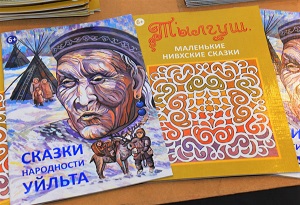 With the support of Sakhalinmorneftegaz-Shelf, the ‘Living Spring’ festival of national cultures is held annually in the Ulch District of the Khabarovsk Territory. The festival aims to preserve the unique culture of the Ulch people of Siberia and the Far East. The festival programme includes workshops on creating traditional souvenirs, tastings of traditional cuisine, and an exhibition of decorative and applied arts. There are also performances by folk ensembles.
Having worked alongside the indigenous peoples of Sakhalin and the Khabarovsk territories since 2001, Sakhalin oil workers have supported various projects aimed at preserving the cultures and languages of indigenous peoples in the Far East. Thanks to the company’s support, a series of textbooks on the Ulch and Nivkh languages has been developed and published for primary school pupils, a Russian-Nivkh audio dictionary has been produced, and dozens of books reflecting the rich culture of the indigenous peoples of the Far East have been published. A cartoon in the Nivkh language based on the folk tale ‘The Shaman’ has been created for children for the first time.
Department of Information and Advertising
Rosneft
April 30, 2026