Please activate JavaScript in your browser to use all interface options.

-315xx70.png)


Rosneft Organises Round Table Discussion on Conservation of Steller’s Sea Eagle in Khabarovsk Territory
30 January 2026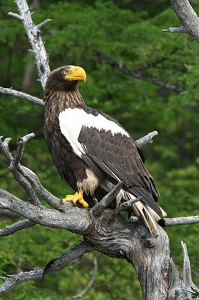
Employees of the Komsomolsk Refinery (a subsidiary of Rosneft) and scientists from the Zapovednoe Priamurye Nature Reserve have held a roundtable discussion on issues related to conserving the population of Steller’s sea eagles, which are predators listed in Russia’s Red Book. Leading Russian ornithologists from Lomonosov Moscow State University and Amur State Teacher’s Training University attended the event, as well as specialists from the regional environmental protection prosecutor’s office and others.
Thanks to the support of Rosneft, the long-term project ‘Under the Strong Wing’ is successfully studying and protecting Steller’s sea eagles in the Khabarovsk Territory. The collaboration between the Komsomolsk Refinery and the Zapovednoe Priamurye Nature Reserve focuses on studying an important indicator species of the Amur River basin ecosystem.
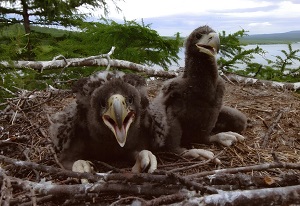 During the project, field expeditions were organised in the Udyl Nature Reserve. Remote observations of birds were also conducted using photo and video equipment, as well as unmanned aerial vehicles. Additionally, laboratory studies were conducted for the first time on samples of fish consumed by eagles and the feathers of the birds of prey.
Ornithologists have collected valuable information about the lives of birds, enabling them to conclude that, despite the general decline in the global population of Steller’s sea eagles, the population in the Lower Amur region is stable. The most favourable breeding grounds for the birds are the shores of the protected Lake Udyl, where around 150 nests have been found.
During the discussion, the experts highlighted the project’s promising nature, given the many gaps in scientific knowledge about the life of Steller’s sea eagles. Ornithologists also emphasised the exceptional importance of the information obtained during the project for updating Russia’s Red Book and for developing environmental protection recommendations for companies operating in the Amur River basin and along the coast of the Sea of Okhotsk. These materials will also supplement educational programmes for schoolchildren and students.
 Preserving the environment for future generations is one of the key areas of Rosneft’s development strategy. The Company and its subsidiaries are implementing a number of comprehensive programmes to preserve biodiversity and natural resources in the regions of operations. They are also striving to ensure environmentally friendly production processes and minimise their environmental impact. Ornithological projects are given special attention. Thanks to the support of its subsidiaries in various regions across the country, Rosneft is conducting research and developing measures to preserve and protect rare bird species such as Steller’s sea eagles, wild geese and white gulls, etc.
For Reference:
The Steller’s sea eagle is one of the largest birds in the world, and it nests only in the Russian Far East. Its global population is estimated to number between 5,000 and 7,000 individuals, around 1,200 of which live in the Khabarovsk Territory.
The species is listed as rare and highly vulnerable in all existing Red Books. The decline in their numbers is largely due to human activity, but there are other reasons as well, such as slow reproduction rates and changes in the hydrological regime of rivers.
Department of Information and Advertising
Rosneft
January 30, 2026